News

Latest news and updates from our company

Nantong Changhai Brings Niutang Brand to The 20th CPHI World Pharmaceutical Raw Materials China Exhibition 2020!
2026-04-22

Nantong Changhai Brings Niutang Brand to The 20th CPHI World Pharmaceutical Raw Materials China Exhibition 2020!

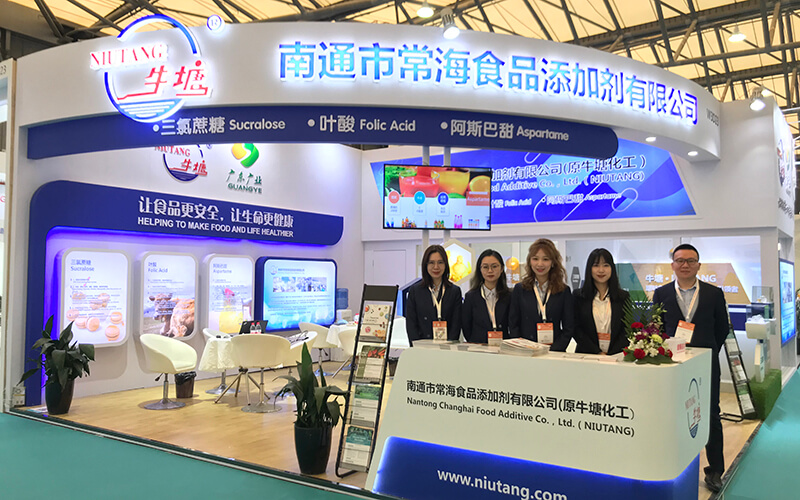
From December 16th to 18th, 2020, CPHI World Pharmaceutical Ingredients China Exhibition was grandly opened at the Shanghai New International Expo Centre in Pudong. Nantong Changhai, showcasing its Niutang brand at booth W3D23, presented the highest quality Niutang products to merchants from various regions. Nantong Changhai Food Additives Co., Ltd., a subsidiary of Guangdong Guangye Qingyi Food Technology Co., Ltd., was selected as one of the "Double Hundred Enterprises" (a subsidiary of a central enterprise and one of the top 100 local state-owned backbone enterprises) by the state in 2018. Nantong Changhai has focused on the research and development and production of food additives for over 50 years, with nearly 30 years of experience in folic acid production. It was among the first manufacturers of folic acid in China and owns the globally renowned brand "Niutang". Nantong Changhai has obtained food production licenses and feed production licenses, and has passed certifications from multiple international standard systems, including ISO9001, ISO14001, FSSC2200, OHSAS18001, KOSHER, HALAL, and SEDEX registered membership. Nantong Changhai Food Additives Co., Ltd. is currently one of the world's leading folic acid manufacturers, with products sold to over 100 countries and regions in Europe and America. It has also established long-term and positive cooperative relationships with many internationally renowned companies. This year's CPHI World Pharmaceutical Ingredients China Exhibition brought together numerous well-known pharmaceutical and food companies, attracting many professionals to visit. During the exhibition, many visitors went to the Niutang booth to learn about and negotiate. Niutang's on-site staff provided professional explanations to visiting merchants, allowing them to gain a deeper understanding of the Niutang brand and products, and to recognize Niutang's corporate philosophy of "making food safer and life healthier." Mobile: +8615651039172 E-mail: sales9@alchemist-chem.com Website: www.changhai-niutang.com

Read More
Changhai Company Holds Inauguration Ceremony for the '100-Day Campaign' of the Isomaltitol Project
2026-04-22

Changhai Company Holds Inauguration Ceremony for the '100-Day Campaign' of the Isomaltitol Project

In recent years, the nation has attached great importance to the development of biomanufacturing, explicitly proposing to actively build a new growth engine for biomanufacturing and making it a strategic emerging industry development direction. The isomaltitol project is a concrete step for Guangye Qingyi and Changhai Company to transform into biomanufacturing, and also an important measure to develop new quality productivity, promote enterprise transformation and upgrading, and achieve sound development. To seize the new opportunities for biomanufacturing development, on February 13, 2025, Changhai Company held an inauguration ceremony for the "100-Day Campaign" of the isomaltitol project. Yan Zhuansong, Secretary of the Party Committee and Chairman of Guangye Qingyi, attended the event and delivered a speech. Zeng Weishan, Secretary of the Party Branch and Chairman of Changhai Company, presided over the event. Yan Zhuansong emphasized three points: First, maintain unwavering confidence and seize the opportunity to leverage the company's professional technical advantages and project transformation experience. Utilize an industry-collaborative approach to develop this project into a model for Guangye Qingyi's biomanufacturing, setting an industry benchmark. Second, implement the "six-in-one" approach to project construction, closely monitor key milestones, clarify the goals and tasks of each stage, and establish an effective monitoring and feedback mechanism to promptly identify and resolve problems, ensuring the project is completed on time, with high quality, and safely. Third, accelerate the transformation of reserve project results, promoting the technology from the laboratory to the market, and promptly launching high-quality new products that meet market demands to enhance the company's competitiveness. Following this, Yan Zhuansong held in-depth discussions with the construction team, listening to their reports on the project's resumption of work and production and construction progress. He instructed the construction team to work backwards from the deadline, using visual aids to track progress, ensuring the project is completed within the stipulated time. Yang Hongjun, Guangye Qingyi's full-time external director, Xu Yong and Cui Bingqun, members of the Party Committee and Deputy General Managers, the management team, middle-level managers, workshop personnel of Changhai Company, and the construction team participated in the event. Mobile: +8615651039172 E-mail: sales9@alchemist-chem.com Website: www.changhai-niutang.com

Read More
Nantong Changhai was invited to attend the 2020 China Vitamin Industry Development High-Level Forum
2026-04-22

Nantong Changhai was invited to attend the 2020 China Vitamin Industry Development High-Level Forum

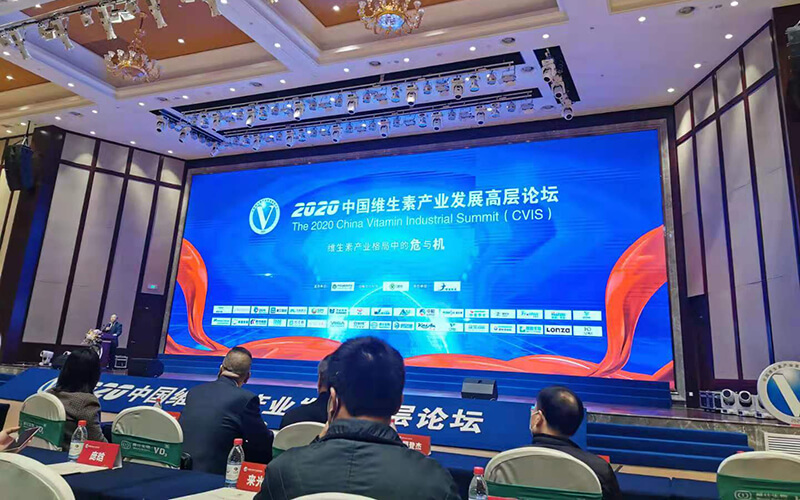
The China Vitamin Industry Development High-Level Forum was held in Dongyang, Zhejiang Province, on December 13-14, 2020. Nantong Changhai was invited to attend and discuss "Opportunities and Challenges in the Vitamin Industry Landscape" with other participants. Nantong Changhai Food Additives Co., Ltd. (formerly Niutang Chemical), a subsidiary of Guangdong Guangye Qingyi Food Technology Co., Ltd., was selected as one of the "Double Hundred Enterprises" (a subsidiary of a central enterprise and one of the top 100 local state-owned backbone enterprises) by the state in 2018. It has obtained food production licenses and feed production licenses and has passed certifications for multiple international management systems, including ISO9001, ISO14001, FSSC2200, OHSAS18001, KOSHER, HALAL, and SEDEX registered membership. Nantong Changhai is currently one of the most influential high-intensity sweetener manufacturers in China and one of the first folic acid manufacturers in the country. With over 50 years of experience in the research and development and production of food additives, including nearly 30 years of experience in folic acid production, Changhai owns the globally renowned brand "Niutang." Its products are sold to over 100 countries and regions in Europe and America. The company has also established long-term and positive cooperative relationships with many internationally renowned companies. Changhai was invited to participate in the conference and showcase its folic acid products, attracting widespread attention and inquiries from manufacturers across the country. Many expressed their willingness to further explore cooperation opportunities. On-site staff provided detailed explanations and professional answers regarding the company and its products, earning high praise from the clients. Mobile: +8615651039172 E-mail: sales9@alchemist-chem.com Website: www.changhai-niutang.com

Read More
Changzhou Niutang Chemical Plant Co., Ltd.
2026-04-28

Changzhou Niutang Chemical Plant Co., Ltd.

Running a chemical manufacturing plant like ours at Changzhou Niutang means facing realities that rarely make it into news coverage. Decisions about process development, sourcing, and environmental controls shape the way we impact industries far downstream. For everyone under our roof, every batch means more than an order fulfilled; it is a direct measure of our know-how put to the test by real-world demand. Quality expectations are relentless. Adherence to exacting purity levels, staying ahead of evolving regulations, and our daily vigilance against contamination become part of our operations, not boxes to check. Every shipment reflects years of accumulated knowledge, hands-on practice, and a constant race to keep the facility operating at peak efficiency. Improvements in the cleanroom, waste management, and energy usage—or in routine process tweaks—sometimes shave a tenth of a percentage from costs or emissions, which on an annual scale adds up to real progress for both business and safety. Not every innovation needs to be headline-grabbing; consistency and reliability in our industry are often undervalued until they are missing. At the same time, investment in new equipment or method upgrades means weighing costs against the pressure to remain price competitive, all while demands for tighter environmental controls and transparency only grow.Our operators, engineers, and lab teams form partnerships that give us an edge over rivals relying more on external consultants or quick fixes. That close collaboration between research, production, and logistics means feedback moves from the plant floor to the lab and back, not stuck in emails or filtered through intermediaries. The work requires dedication and judgment earned over years—understanding how minor temperature swings in a reactor can tip quality metrics outside narrow specification bands. There’s always someone double-checking the line and reading the signs in the data before a problem turns into a recall. Sometimes lessons come hard, but transparency and team troubleshooting turn small mistakes into big learning moments.The sense of continuity between generations at a manufacturing plant carries its own form of resilience. Older hands teach by example, sharing how environmental conditions, batch histories, and raw material variations affect everything from yield to customer satisfaction. That experience gives substance to the word expertise: It’s not just academic. A strong safety culture doesn’t grow from slogans; it lives in the routines, checklists, and mentoring that keeps accidents rare and response swift.Manufacturing at scale brings responsibilities reaching beyond plant gates. Neighbors notice how we manage emissions and truck traffic as much as local authorities watch discharge standards. Meeting rising local and global expectations does not come down to a single annual report or inspection. It takes a visible daily commitment, community outreach, and a willingness to host difficult conversations about waste or water use in periods of shortages. The cost for emissions abatement and water treatment hits the bottom line directly, but our company reputation and license to operate depend on getting them right.New environmental laws, changing chemical lists, and shifts in global supply chains keep the pressure on our compliance and purchasing teams. Sourcing non-hazardous or renewably derived inputs presents a complex challenge. Customers place value on traceability, so investment in IT and record-keeping grows steadily; every lot produced can be tracked, and every audit request can be answered promptly and with evidence. We notice that more and more clients request environmental certifications or ask about our carbon footprint—so reporting, once seen as an administrative burden, becomes a practical business asset. Smarter waste management, resource recovery, and aggressive recycling cut costs and demonstrate to our community that responsible operation sits at the core of how we run our facility.In real manufacturing, trust is earned through consistent supply, quality that meets customer audits, and open communication when things go wrong. No process is perfect and even well-built plants hit snags—unexpected equipment failures, supplier delays, or regulatory shifts. Years of investments in backup systems and contingency planning limit disruptions, but communicating honestly with buyers and regulators makes a stronger business in the long run. Honest feedback and responsive service build the kind of relationships that keep both sides working through setbacks. Too often, market focus turns toward price and headline numbers, but partners that stick through the cycles of capacity expansions, slowdowns, and regulatory uncertainty value not just our product, but our ability to deliver, troubleshoot, and adapt.Technical data without skilled application offers little value. We spend effort sharing technical support and real-time field troubleshooting, and listening to how clients use our ingredients in their formulations drives our next round of process improvements or even new products. Close customer relationships become a source of innovation; sometimes new chemistries grow out of a simple challenge put to us by a long-time client looking for better solubility, improved stability, or safer handling. Working through those puzzles together anchors both businesses against the market’s next round of volatility.Future growth will depend on how we meet the challenge posed by advanced regulatory regimes, shifting customer demands, and global forces that shape raw material prices and logistics. Investments in automation and smarter process controls play an important role. So does keeping skilled people on the production line who recognize the difference between an acceptable batch and an outstanding one. Human oversight and technical intuition continue to hold value in an industry sometimes over-promised by automation vendors. As new chemistry moves from lab bench to tonnage scale, safety, quality, and environmental stewardship must evolve in parallel.Broadening product portfolios and adapting to alternative feedstocks increases the technical burden and market risk, but also creates new opportunities for growth. We see that as clients around the world develop higher expectations for traceability, documentation, and sustainable production, investing in those areas continues not as trend-following, but as survival and growth strategy. Building those capabilities calls for patience and investment discipline—traits that mark manufacturers apart from short-term actors in the supply chain.Stability and progress in the chemical industry ride on the backs of manufacturers willing to invest, learn, own their mistakes, and put their name behind every shipment. We live with the product from raw material intake through to final packaging and customer feedback. Our legacy is set not by marketing but by technical depth, consistency, and the relationships built over thousands of batches processed in-house. Changzhou Niutang Chemical Plant will keep facing challenges with those principles in mind, building on practical experience while staying open to new opportunities. Every day on the plant floor renews that commitment, and that’s where the value really starts.

Read More
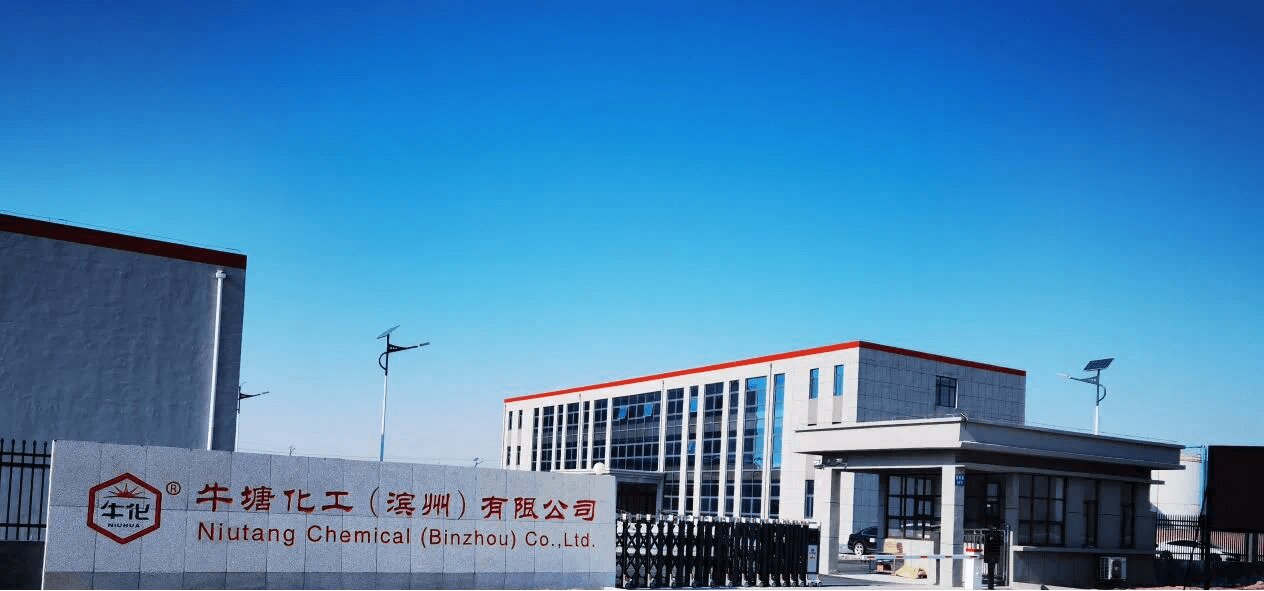
Niutang Chemical Binzhou Co., Ltd.
2026-04-28

Niutang Chemical Binzhou Co., Ltd.

Working in the field of food additives and chemical manufacturing means facing an ever-evolving landscape. Each production cycle offers another puzzle to solve. From tight regulatory controls, ongoing sustainability demands, and wide swings in global market prices, every shift holds a lesson. In our plant at Binzhou, we watch as a single shipment delay or supplier change sets off ripples from the mixing stations right through to the packaging line. A customer’s choice in a distant region can mean pivoting ingredients by the metric ton. Our job doesn’t start with the drum or the reactor but with understanding those moving targets and turning them into reliable, safe, and consistent food ingredients.The rise of global safety and quality expectations pushes our team to dig deep. Recent years have seen consumers and authorities asking louder questions about what enters the supply chain. Certifications that used to be considered nice-to-have—GMP, FSSC22000, Kosher, and Halal—are now listed on nearly every purchase order. As practitioners, we know signing a certificate means little if the underlying operational discipline isn’t solid. Line workers double-check batch records, lab technicians calibrate every instrument, and managers walk the floor checking the smallest detail. We keep detailed logs not because rules demand it, but because a single slip can close a plant or end years of painstaking market development. Earning trust in this business is about doing things right every single time and showing proof, not just on paper but in every lot we send out.Scale presents its own rewards and trials. Large orders can drive costs down and keep lines humming, though sourcing ingredients in such volumes often means managing a web of relationships with raw material producers. Securing high-grade inputs relies on careful vetting, site visits, and regular cross-checks. Downturns are just as real: a flood in one province or an export policy change across a border can leave warehouses overstocked or, worse, leave a production slot idle as a key intermediate goes missing. In chemical plants like ours, these swings ask for agility—adjusting run rates, rescheduling shipment slots, and sometimes working overtime to hit delivery dates. The most reliable equipment in the world means nothing without the experience of operators who spot problems before they reach the next stage.Attention to the environment is part of every major decision. Local communities have a stake in how we treat process water, manage waste, and control emissions. Pollution controls aren’t just a compliance box, they’re the mark of whether we belong in our own city. Changes to our wastewater plant or a new method for handling spent solvents go through many rounds of testing and monitoring. From direct negotiations with city officials to community open houses, every question about safety has to be met with data—samples, audits, third-party inspections. Our methods protect our staff and our neighbors, and build a sense of shared purpose. Neglecting this close stewardship quickly erodes trust and leaves no room to grow.Continuous improvement lives in the small daily moments. Each lab validation, line changeover, or trial blend feeds into the next batch. We tackle bottlenecks with cross-team feedback: one operator flags a valve that sticks in winter, the next shift tweaks the preheating schedule, months later that tiny intervention becomes part of the procedure for the entire division. Suggestions rise from every team, feeding a cycle—problems flagged, solutions trialed, results logged, and improvements locked into the routine. Staff are trained both in technical skill and the mindset to spot problems before they multiply. Over time, these micro-adjustments make a measurable difference, reducing rework, raising yields, and keeping downtime to a minimum. Experience grows on the floor, not behind a desk.Looking forward, investing in automation and digitalization brings gains, but only with careful integration. We use process control systems and digital batch records to track performance and catch deviations early, but these tools don’t replace the judgment built over years of hands-on work. Digital tools catch the obvious, but a human touch—listening for an unusual motor noise, catching the subtle color in a blend—remains essential. Training programs for new systems mix classroom time with side-by-side mentoring so the technology works for us rather than against us. As new layers of data arrive, we strip away the noise and hone in on what makes our lines safer and less wasteful.Challenges from emerging regulations and shifting competitive pressure don’t ease up. Global standards move forward each year, from limits on contaminants to tighter caps on energy use. Staying in business, let alone growing, means matching and anticipating new requirements before they bite. Years of investments in facility upgrades, expert hiring, and honest dialogue with regulators pull us clear of the short-term fixes that can cause long-term headaches. The stakes are as much about reputation as bottom-line results—facing a recall or audit with a clean record establishes credibility that no advertisement can buy.Every day spent running a manufacturing plant underscores just how much is riding on each decision, from sourcing a drum of input to pushing a button on a control panel. Each piece—science, supply, safety, cooperation—demands focus. Success arrives batch by batch, year by year, measured not only in the weight shipped out but the strength of relationships built at every link in the chain. No shortcut replaces steady commitment or learning from the last challenge, as any seasoned operator or chemist on the floor can attest.

Read More
Anhui Hongze New Material Technology Co., Ltd. (Hungzer)
2026-04-28

Anhui Hongze New Material Technology Co., Ltd. (Hungzer)

From the concrete floors of our production facility to the technical discussions that happen across workstations, the story of Anhui Hongze New Material Technology Co., Ltd. unfolds through practical lessons earned day after day. Chemical manufacturing brings challenges you can’t solve just by reading papers or sitting in an office. Pumps clog. Raw materials sometimes arrive late. Customer requirements evolve. Every operator, every engineer, and every maintenance specialist in the plant understands the value of not just getting the chemical formula right, but getting the process to run smoothly, again and again.As a manufacturer, not a trader or reseller, we shoulder full responsibility for the integrity of our products. There’s no spreadsheet trick or marketing spin that fixes a real-world process inconsistency. Our production teams spend years learning how minor changes in temperature, pressure, or mixing order affect the purity and appearance of finished goods. When a customer calls with a question about consistency or technical properties, we don’t have to ask someone overseas or hunt for answers in a catalog. The solutions start with the people who actually stand in front of the reactors, adjust the parameters, and inspect the output every single day.Raw material choices are more than an entry in a purchasing database. Our procurement specialists rely on relationships and technical know-how, not just pricing, to guarantee input quality. Each drum or sack that enters our gates gets checked, logged, and tested in real time—because one slip with a low-grade input can ruin an entire week’s production. Our experience with sourcing has taught us that trust gets built batch by batch and supplier by supplier. Everyone up and down the chain understands quality isn’t negotiable. In today’s highly competitive materials market, anyone who tries to cut corners learns quickly that the extra cost of correcting one problem wipes out any notional savings.Innovation at the plant level doesn’t spring from buzzwords. It comes from patient effort, measuring what works and what doesn’t. When clients bring special requests, our technical teams spend days in the lab testing formulas and weeks in the plant running trial batches, tuning equipment, and recording every result. Getting from the drawing board to real, reliable production takes far more than theoretical know-how. Our track record with customers builds on the ability to scale up promising new ideas without losing sight of reproducibility and ease of operation. Improvements happen on the job, guided by hands-on feedback. No two shifts ever look exactly the same, and real-world changes always serve as the truest test.Auditors, regulators, and big customers often visit, and they see not just our data but our methods. Being open means every test, every maintenance report, and every production document holds up to scrutiny. The stains on the shop floor, the wear patterns on equipment, and the archived logs all tell their own story. Mistakes happen, but hiding them never solves anything. Our teams foster a culture where it’s safe to point out something’s off, whether with a color, a smell, or a reading on the control panel. These practical habits prevent minor slips from becoming system-wide failures and keep our standards moving forward. In this business, accountability isn’t a project; it’s the way work gets done day to day.Someone who only buys and sells chemicals never faces the reality of a clogged pump, a slurry that settles the wrong way, or an end user who needs something just a touch more robust for their process. Our teams spend hours troubleshooting with clients—talking through solution paths, sending samples, or bringing new batches right up to the loading dock. We’ve learned that real solutions always look messier than a block diagram or process flowchart. Sometimes it means investing in new hardware, sometimes it comes down to swapping out a raw material lot, other days it’s hands-on advice and tweaks in the operating window. Customers value practical backup and honest timelines, not just polished sales pitches.Manufacturing complex materials draws heavily from local resources—water, energy, labor, transport. Keeping output steady without burning bridges in our community means we build projects that last, not just chase quarterly numbers. Years of operation make clear that shortcuts in emissions, wastewater treatment, or waste reduction quickly backfire. Bottlenecks or episodes of non-compliance invite government scrutiny that costs more down the line than building things right ever would. We work side by side with local regulators and neighbors to keep impacts in check, investing in treatment systems, process improvements, and training. These investments don’t show up in glossy ads, but they pay off with steady permits, community goodwill, and fewer operational surprises.No operation gets everything perfect from day one. Even after decades in business, each run through the process line brings small surprises. We log what works, what doesn’t, and what needs attention for the next shift. Patterns identified by veteran operators save countless hours that no algorithm or dashboard could forecast—the sound of a pump under strain, a faint color shift in a reaction vessel, the feedback of line workers speaking up about the feel of the product. Every experienced hand has a story about catching a near-miss, sharing advice, or finding unexpected improvements that textbooks simply don’t cover. This practical knowledge gets passed down, bolstered by respect, trust, and transparency. The best operations grow stronger by learning from their missteps—not just celebrating their wins.Supply chains have a habit of changing without notice. Geopolitical tensions, shipping delays, or sudden price spikes test even the best-run plant. Direct engagement with suppliers, logistics partners, and even rival manufacturers builds the network that keeps trucks rolling and inventory stocked. Our teams keep an eye on developments far outside their own departments, flagging risks, identifying backup sources, and maintaining the kind of relationships that smooth out rocky periods. A plant that owns its production, manages its sourcing, and stays close to process realities can adapt faster and keep commitments even when the landscape shifts. Reliability, earned batch by batch, outlasts the promises of hands-off operators.No equipment upgrade or process tweak substitutes for the collective experience of a dedicated workforce. From the shift supervisor who knows every valve and fitting to the new technician learning sample testing, real progress rests on continuous learning and mutual respect. Every employee deserves a safe, straightforward environment in which to contribute. We focus on practical safety, good pay, health programs, and open feedback rather than distant incentive schemes or slogans. Genuine teamwork translates into better procedures, fewer incidents, and a spirit of improvement that customers see in product quality. Retaining seasoned people pays off when the toughest jobs come up—emergencies, difficult switchover, or process start-ups. This people-first approach proves itself every fiscal year, through both steady production and rapid troubleshooting when conditions shift.Everything from R&D investments to new environmental controls and expanded capacity means putting in long hours, taking on real risk, and betting on steady returns. Placing stability and dependability above short-term flash helps build lasting partnerships. Customers who work directly with us know there’s a face, a name, and a technical team standing behind every lot number. Our commitment doesn’t rest on slogans but on our willingness to work through problems in real time, ship replacement runs at cost if necessary, and never lose focus on producing value through practical manufacturing strength. Decades of work make clear: transformation in materials science grows from reliable craftsmanship, honest engagement, and decisions made with both eyes open to practical realities and long-term stewardship.

Read More